
Food & Drug Safety
Application of High-Precision X-ray Fluorescence Elemental Analyzer for the Determination of Trace Iron, Manganese, and Lead in Gasoline
This application note presents a solution for the rapid and accurate analysis of iron (Fe), manganese (Mn), and lead (Pb) at concentrations ranging from 0.5 ppm to 10 ppm in gasoline, using the E-lite MH monochromatic X-ray fluorescence elemental analyzer.
Application Overview
The gasoline specification standard GB 17930 sets limits for iron, manganese, and lead content at 10 mg/L, 8 mg/L, and 5 mg/L, respectively. The conventional detection method for these elements is atomic absorption spectrometry (AAS), which measures only one element at a time, requires a preheating period, and involves switching light sources for each element. In addition, instrument operation relies on accessories such as combustion gas, air, and cooling water, making the overall procedure relatively less convenient for routine applications.
X‑ray fluorescence spectrometry offers a practical alternative, with advantages including straightforward operation, good detection limits, reliable repeatability and reproducibility, and the capability for simultaneous multi‑element analysis—all without the need for gas supplies or cooling water.
Reference Standards: NB/SH/T 6043-2021, GB/T 17930-2016.
Technical Principles
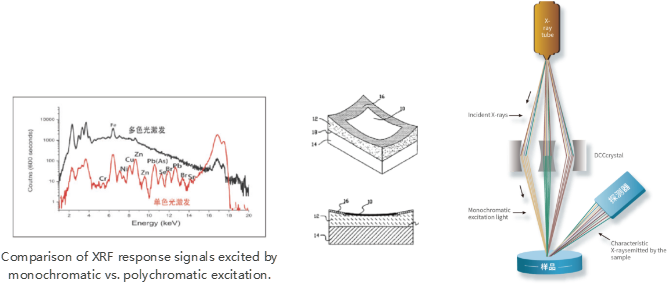
The High-Precision X-ray Fluorescence Elemental Analyzer (HPXRF) utilizes Monochromatic Focusing Doubly Curved Crystal (DCC) optics, which monochromatize polychromatic X-rays from the source and effectively focus them onto the sample. This greatly enhances the instrument's signal-to-noise ratio. Upon monochromatization, elements in the sample emit characteristic X-ray fluorescence signals. These signals are collected and processed by a high-resolution Silicon Drift Detector (SDD), and the software's Fundamental Parameter (FP) algorithm calculates the elemental content in the sample.
Sample Testing
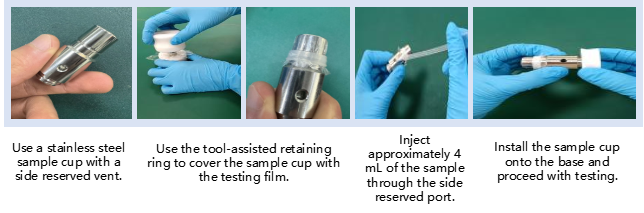
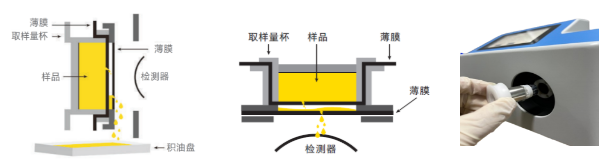
This solution utilizes a specially designed, easy-to-clean, low-background, and reusable stainless steel sample cup, along with supporting tooling. It features simple operation, low cost, and excellent test repeatability.
Side-Loading Design
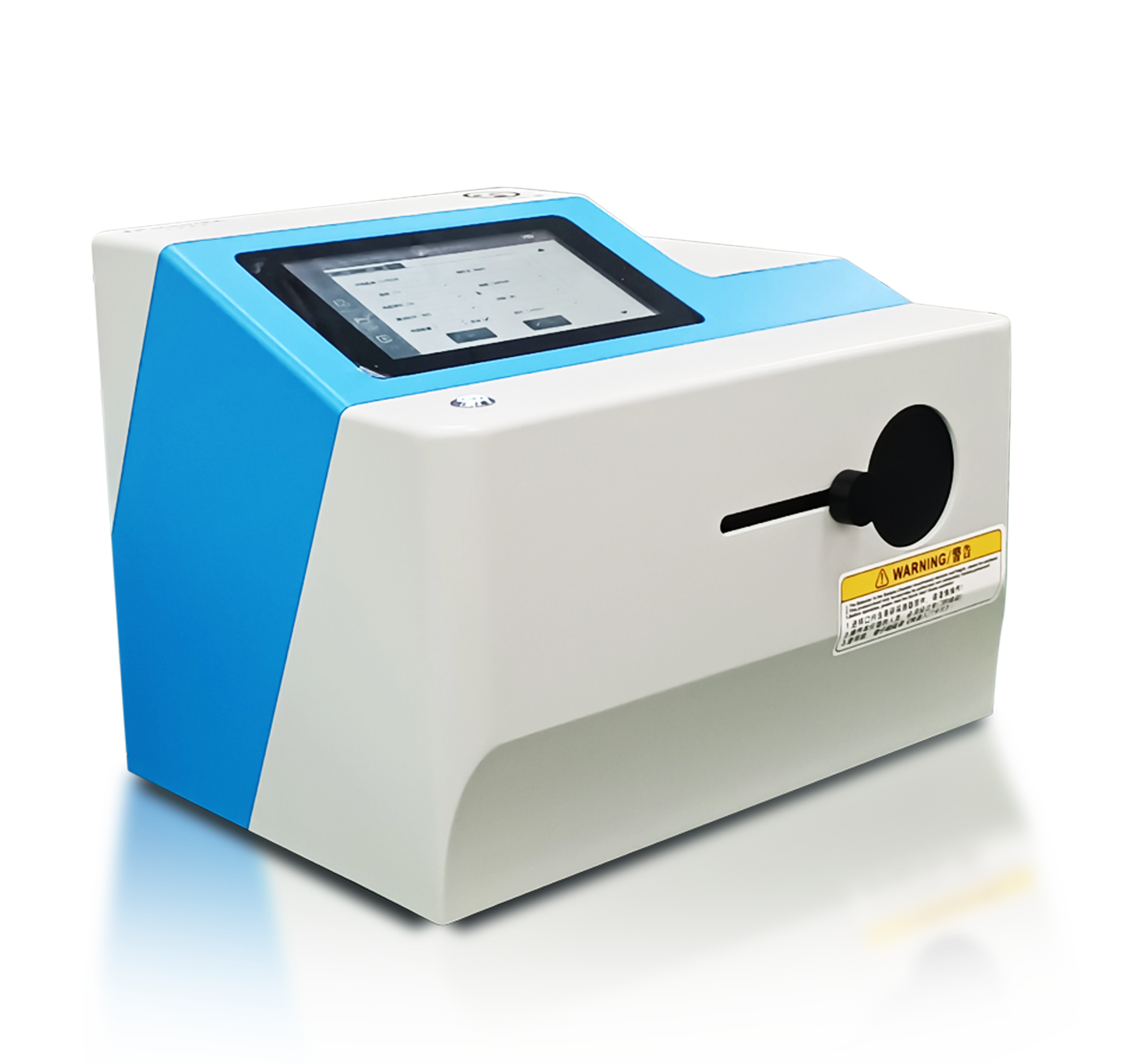
The E-lite series features an innovative side sample introduction system that directs accidental sample spills into a drip tray, preventing leaked oil from contaminating valuable components.
Performance Data
Standard Curves
Utilizing the patented monochromatic Fundamental Parameter (FP) algorithm model software, calibrated with standard samples in the range of 1 ppm to 20 ppm, the linear correlation coefficients for iron, manganese, and lead in gasoline are all above 0.998.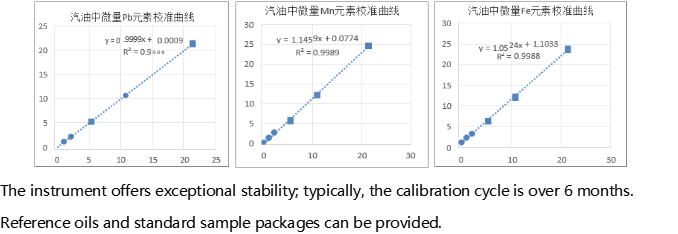
Repeatability
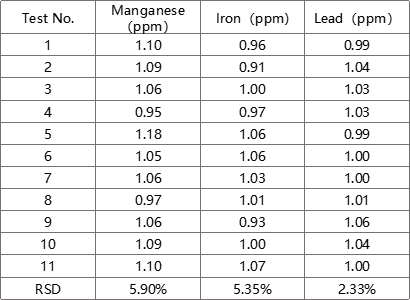
A gasoline sample with a concentration of approximately 1 ppm was tested 11 consecutive times. The relative standard deviations for iron, manganese, and lead were 5.35%, 5.90%, and 2.33%, respectively, which is far superior to the requirements of NB/SH/T 6043-2021.
Installation Requirements

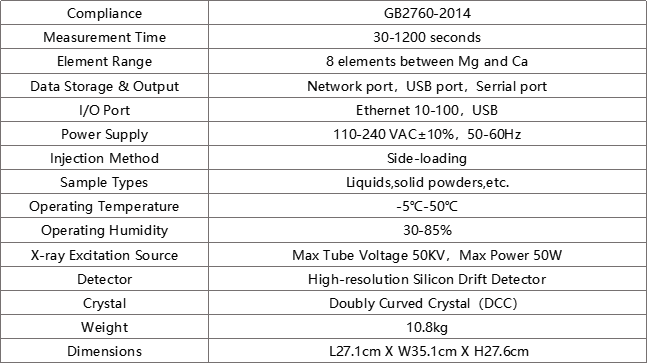
Technical Specifications
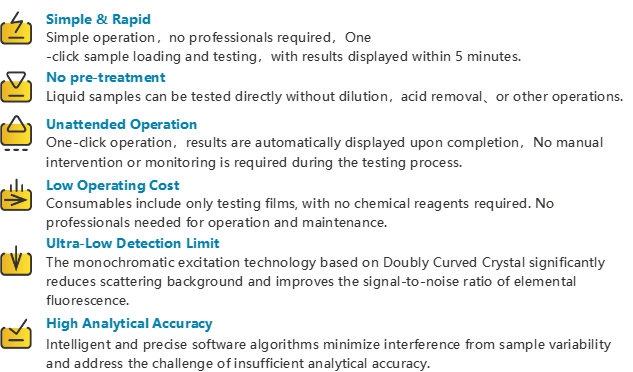
Features and Advantages