
Geology & Mining

Application of High-Precision X-ray Fluorescence Elemental Analyzer for the Determination of Additive Elements (Ca, Zn, P, Mg) and Wear Metal Elements (Fe, Ni, Cu, Zn, etc.) in Lubricating Oils and Greases
This application note presents a solution for the rapid analysis of additive elements (Ca, Zn, P, Mg) and wear metal elements (Al, Fe, Ni, Cr, Cu, Zn, V, Ti, Mo, Pb) in in-service lubricating oils and greases using the E-find MS500 high-precision X-ray fluorescence spectrometer.
Application Overview
Additive elements in in‑service lubricating oils and greases provide valuable information about the condition and remaining service life of the lubricant itself. Meanwhile, the types and concentrations of wear metals present indicate the degree and nature of abnormal equipment wear. Consequently, monitoring both additive elements and wear metals in lubricating oils is of considerable practical importance.
Current analytical techniques for wear metals and additive elements include atomic emission spectrometry (AES), atomic absorption spectrometry (AAS), and X‑ray fluorescence (XRF). However, the non‑uniform distribution of wear metals in lubricating oils and greases, combined with small sample volumes and the need for sample pre‑treatment, poses practical challenges for AES and AAS methods.
This application utilizes high‑precision X‑ray fluorescence elemental analysis for the determination of additive elements and wear metals in in‑service oils and greases. The method is straightforward, rapid, and delivers reliable repeatability, offering a practical analytical solution for the monitoring of lubricants in service.
Reference Standards: :ASTM D4927, ASTM D7751
Technical Principles
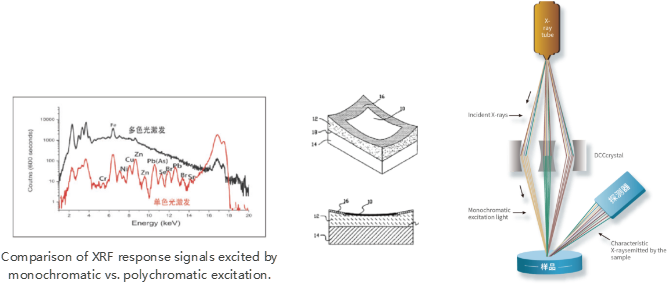
The High-Precision X-ray Fluorescence Elemental Analyzer (HPXRF) utilizes Monochromatic Focusing Doubly Curved Crystal (DCC) optics. This technology monochromatizes polychromatic X-rays emitted from the source and effectively focuses them onto the sample, significantly enhancing the instrument's signal-to-noise ratio. Following monochromatization, elements within the sample emit characteristic X-ray fluorescence signals. These signals are collected and processed by a high-resolution Silicon Drift Detector (SDD), and the software's Fundamental Parameter (FP) algorithm calculates the elemental content in the sample.
Sample Testing
This solution utilizes specially designed sample cups and supporting preparation tools, ensuring simple operation, rapid sample preparation, and excellent repeatability.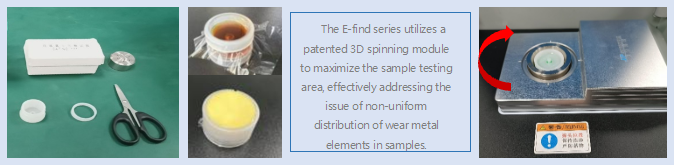
Performance Data
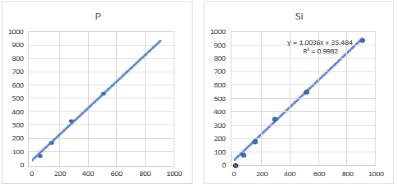
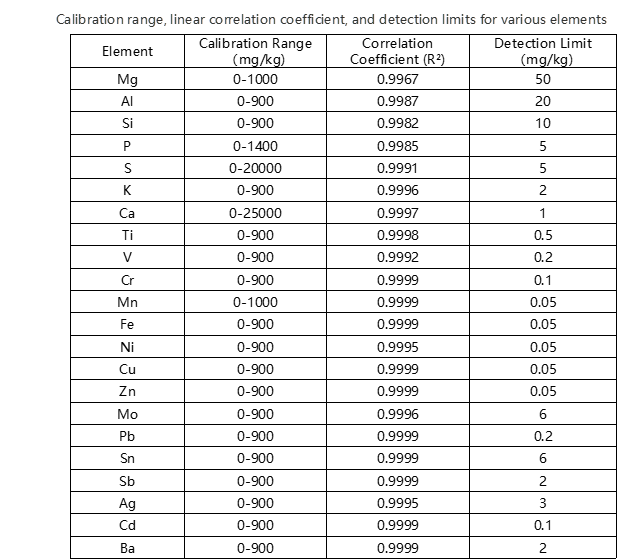
Standard Curves
The patented Fundamental Parameter (FP) software for monochromatic excitation utilizes commercial wear metal standards and a unique reference grease sample library to establish standard curves.
Repeatability
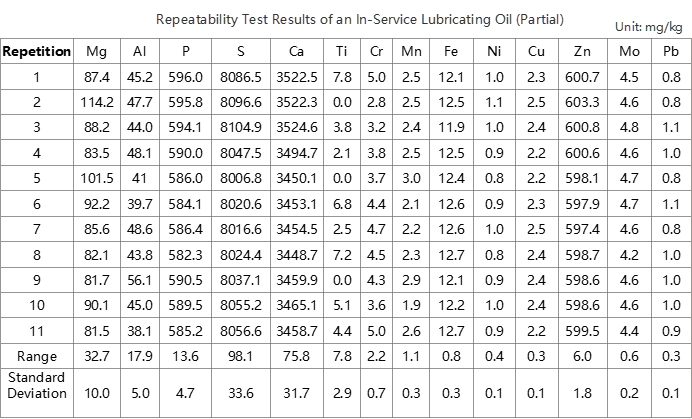
The gold standard sample GAu-15a was tested 7 times repeatedly, and the relative standard deviation (RSD) was calculated.
Accuracy
Installation Requirements

Features and Advantages