
Petrochemical
Application of High-Precision X-ray Fluorescence Elemental Analyzer for the Determination of Sulfur and Chlorine in Automotive Methanol Fuel
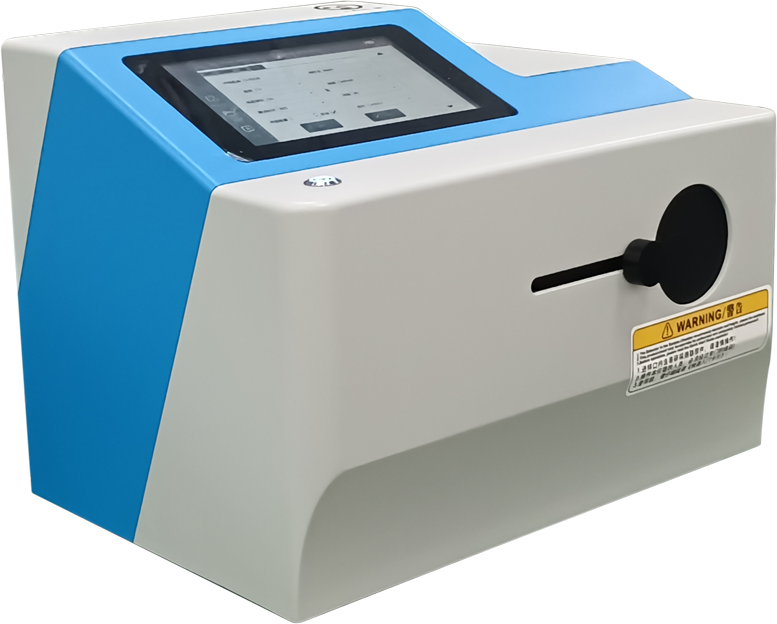
This application note presents a solution for the on-site, rapid determination of sulfur (S) and chlorine (Cl) in automotive methanol fuel using a high-precision X-ray fluorescence elemental analyzer.
Application Overview
Methanol fuel is a clean fuel formulation produced by blending industrial methanol or fuel methanol with denaturant additives and conventional national‑standard gasoline/diesel (or component oils) in a specified volume (or weight) ratio through well‑defined scientific processes. It is generally categorized as methanol gasoline and methanol diesel, and serves as an alternative vehicle fuel, representing an important part of the new energy landscape.
The sulfur and chlorine content in methanol fuel are key technical parameters. Current analytical methods for sulfur determination typically employ ultraviolet fluorescence, while chlorine is measured using micro‑coulometry or potentiometric titration. These approaches are operationally complex, time‑consuming, and not well‑suited for on‑site rapid testing. The E‑lite series high‑precision X‑ray fluorescence elemental analyzer offers a practical solution, enabling simultaneous, rapid, and accurate quantification of sulfur and chlorine in methanol fuel samples.
Technical Principles
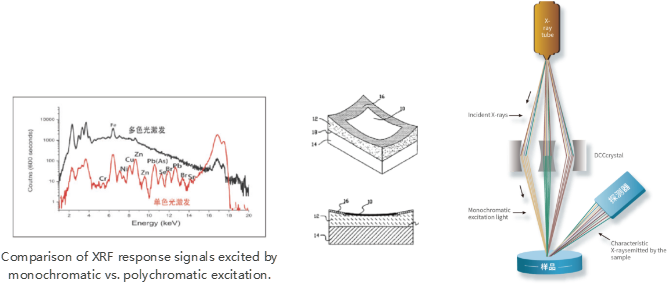
The High-Precision X-ray Fluorescence Elemental Analyzer (HPXRF) utilizes Monochromatic Focusing Doubly Curved Crystal (DCC) optics, which monochromatize polychromatic X-rays from the source and effectively focus them onto the sample. This greatly enhances the instrument's signal-to-noise ratio. Upon monochromatization, elements in the sample emit characteristic X-ray fluorescence signals. These signals are collected and processed by a high-resolution Silicon Drift Detector (SDD), and the software's Fundamental Parameter (FP) algorithm calculates the elemental content in the sample.
Sample Testing
"Disposable Sample Cup" Sample Preparation
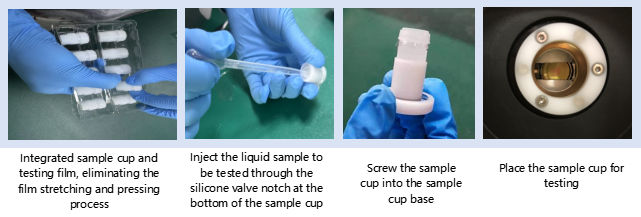
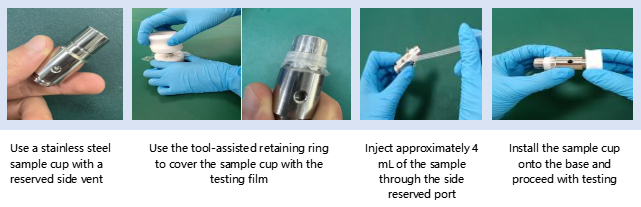
"Reusable Sample Cup" Sample Preparation
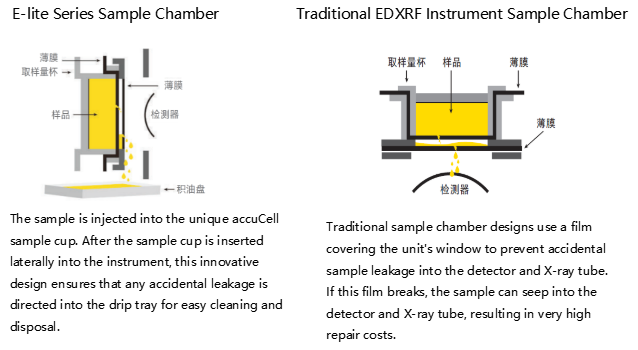
Unique "Side-Illumination" Design Minimizes Detector Contamination from Accidental Sample Leakage
Performance Data
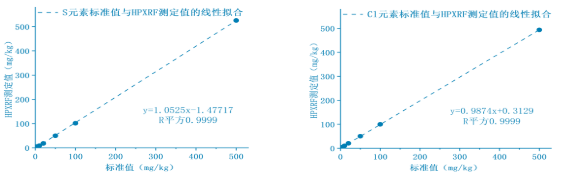
Standard Curves
Standard solutions of S and Cl in methanol were prepared at gradient concentrations of 0, 0.5, 1, 3, 5, 10, 50, 100, and 500 mg/kg to establish the calibration curves, with a measurement time of 300 seconds.
Repeatability
Blank samples were spiked with different concentrations and tested 7 times repeatedly. The relative standard deviation (RSD) of the 7 measurement results was calculated.

Reproducibility
Different concentration samples were prepared into 6 parallel samples. The relative standard deviation of the 6 measurement results was calculated.

Accuracy
Six samples were tested using both the standard method and the HPXRF method. The relative error of the measured values was calculated.
Features and Advantages