
Petrochemical
Application of High-Precision X-ray Fluorescence Elemental Analyzer for the Determination of High Sulfur and Low Chlorine in Crude Oil, Residue Oil, and Fuel Oil
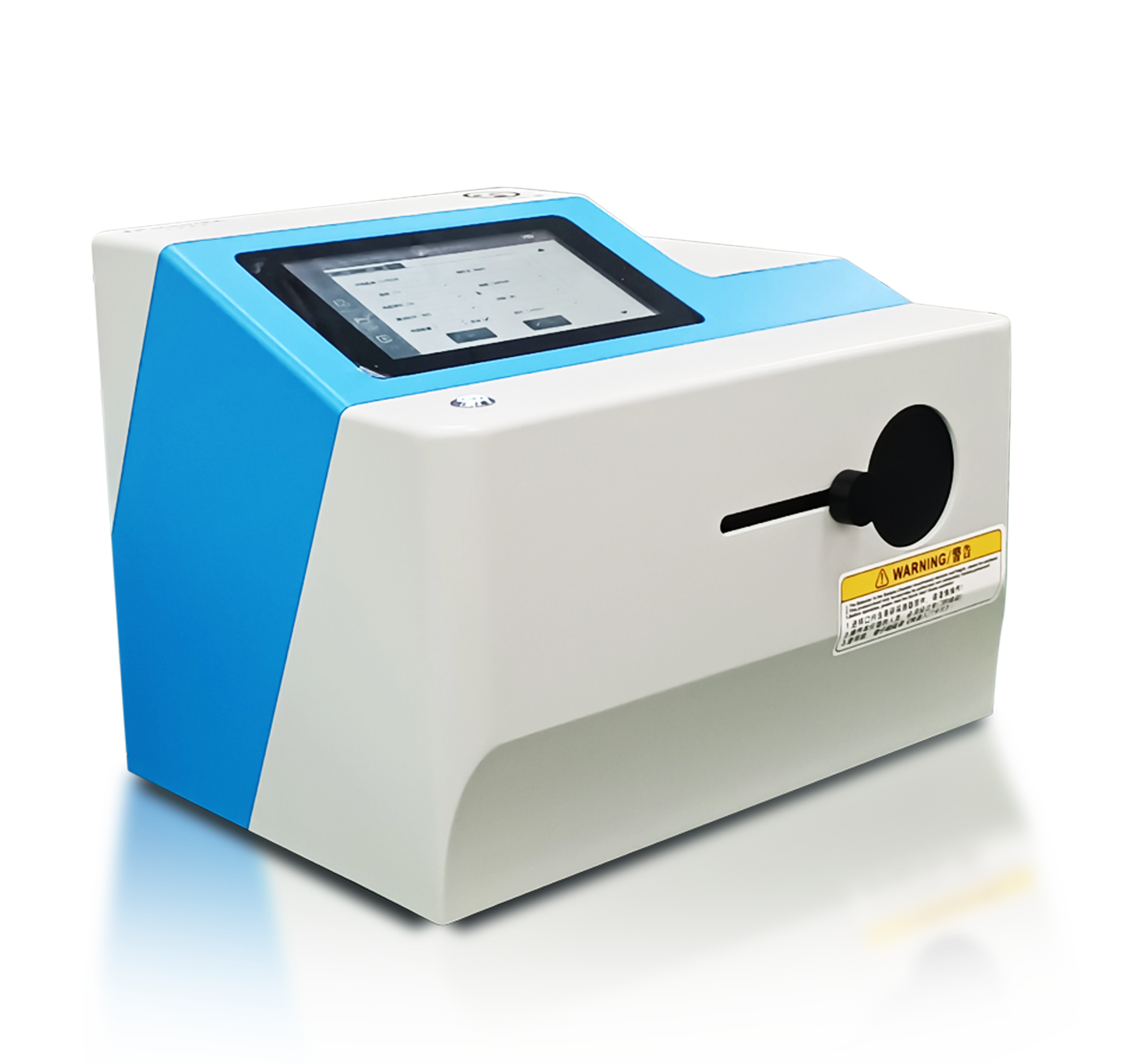
This application note presents a solution for the accurate analysis of sulfur and chlorine in crude oil, residue oil, and fuel oil, with sulfur content ranging from 0.05% to 5% and total chlorine content ranging from 0.5 ppm to 100 ppm, using the E-lite 500 High-Precision X-ray Fluorescence Elemental Analyzer.
Application Overview
Sulfur and chlorine in crude oil, residue oil, and fuel oil are classified as controlled harmful elements with strictly regulated content limits. In crude oil trading, the levels of sulfur and chlorine have a notable influence on the pricing of crude oil and residue oil.
Conventional methods for chlorine determination include combustion ion chromatography or microcoulometry, while sulfur is typically analyzed by X‑ray fluorescence.
This application employs a monochromatic excitation high‑precision X‑ray fluorescence elemental analyzer for the simultaneous determination of sulfur and chlorine in crude oil, residue oil, and fuel oil. The system features straightforward operation, low detection limits, and reliable repeatability and reproducibility.
Reference Standards: ASTM D7039, ASTM D7536, ASTM D7220, ASTM D2622, GB/T 11140, GB/T 17040, GB/T 17606, SH/T 0842, SH/T 0977.
Technical Principles
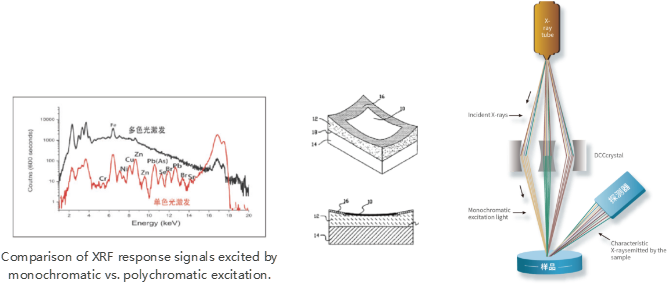
The High-Precision X-ray Fluorescence Elemental Analyzer (HPXRF) utilizes Monochromatic Focusing Doubly Curved Crystal (DCC) optics, which monochromatize polychromatic X-rays from the source and effectively focus them onto the sample. This greatly enhances the instrument's signal-to-noise ratio. Upon monochromatization, elements in the sample emit characteristic X-ray fluorescence signals. These signals are collected and processed by a high-resolution Silicon Drift Detector (SDD), and the software's Fundamental Parameter (FP) algorithm calculates the elemental content in the sample.
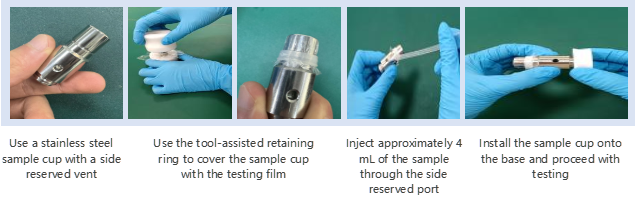
Sample Testing
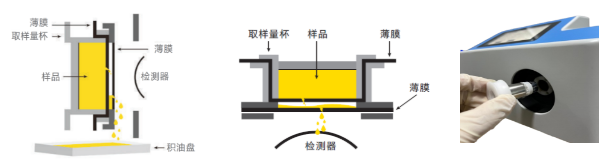
This solution utilizes a specially designed, easy-to-clean, low-background, and reusable stainless steel sample cup, along with supporting tooling. It features simple operation, low cost, and excellent test repeatability.
Side-Loading Design
The E-lite series features an innovative side sample introduction system that directs accidental sample spills into a drip tray, preventing leaked oil from contaminating valuable components.
Performance Data
Standard Curves
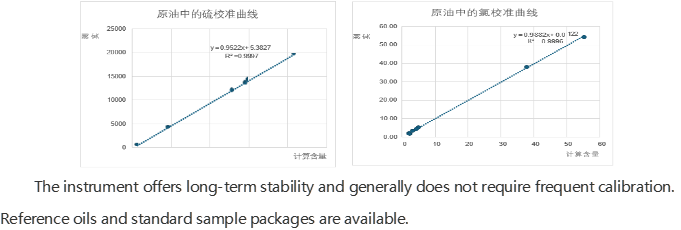
Utilizing the patented Fundamental Parameter (FP) software and after standard sample calibration, the linear correlation coefficients for sulfur in the range of 0.05% to 3% and chlorine in the range of 0 to 55 ppm are shown in the figures below, demonstrating excellent correlation.
Elimination of sulfur interference on Chlorine
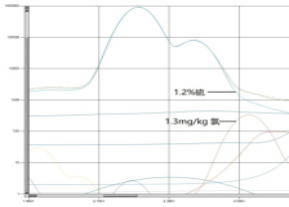
The energy of S-Kβ is 2.468 KeV, while the energy of Cl-Kα is 2.622 KeV. The Kβ line of sulfur produces spectral line interference on the Kα of chlorine. Our patented high-precision spectral deconvolution algorithm can strip the influence of sulfur on chlorine.
Repeatability
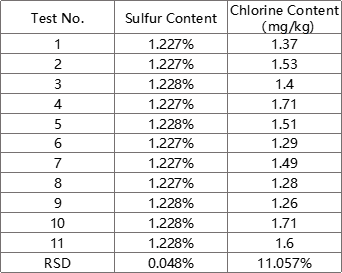
A crude oil sample was tested 11 consecutive times. The relative standard deviations (RSD) for sulfur and chlorine over the 11 tests were 0.048% and 11.057%, respectively, demonstrating excellent repeatability and reproducibility.
Installation Requirement

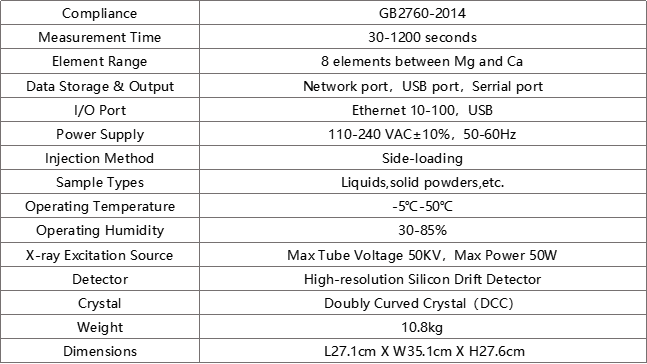
Technical Specifications
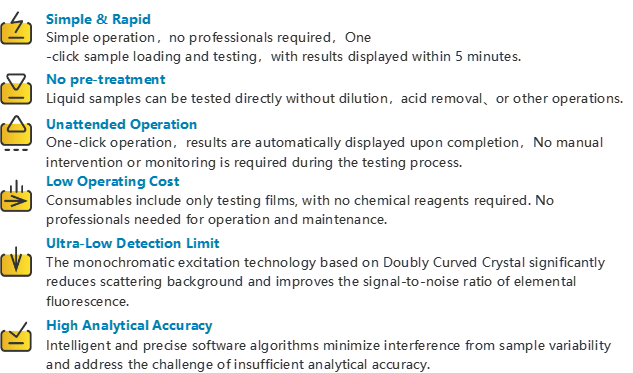
Features and Advantages