
Environmental Monitoring
Application of High-Precision X-ray Fluorescence Elemental Analyzer for the Determination of Phosphorus, Chlorine, Zinc, and Sulfur (Macro Elements) in Lubricating Oils and Additives
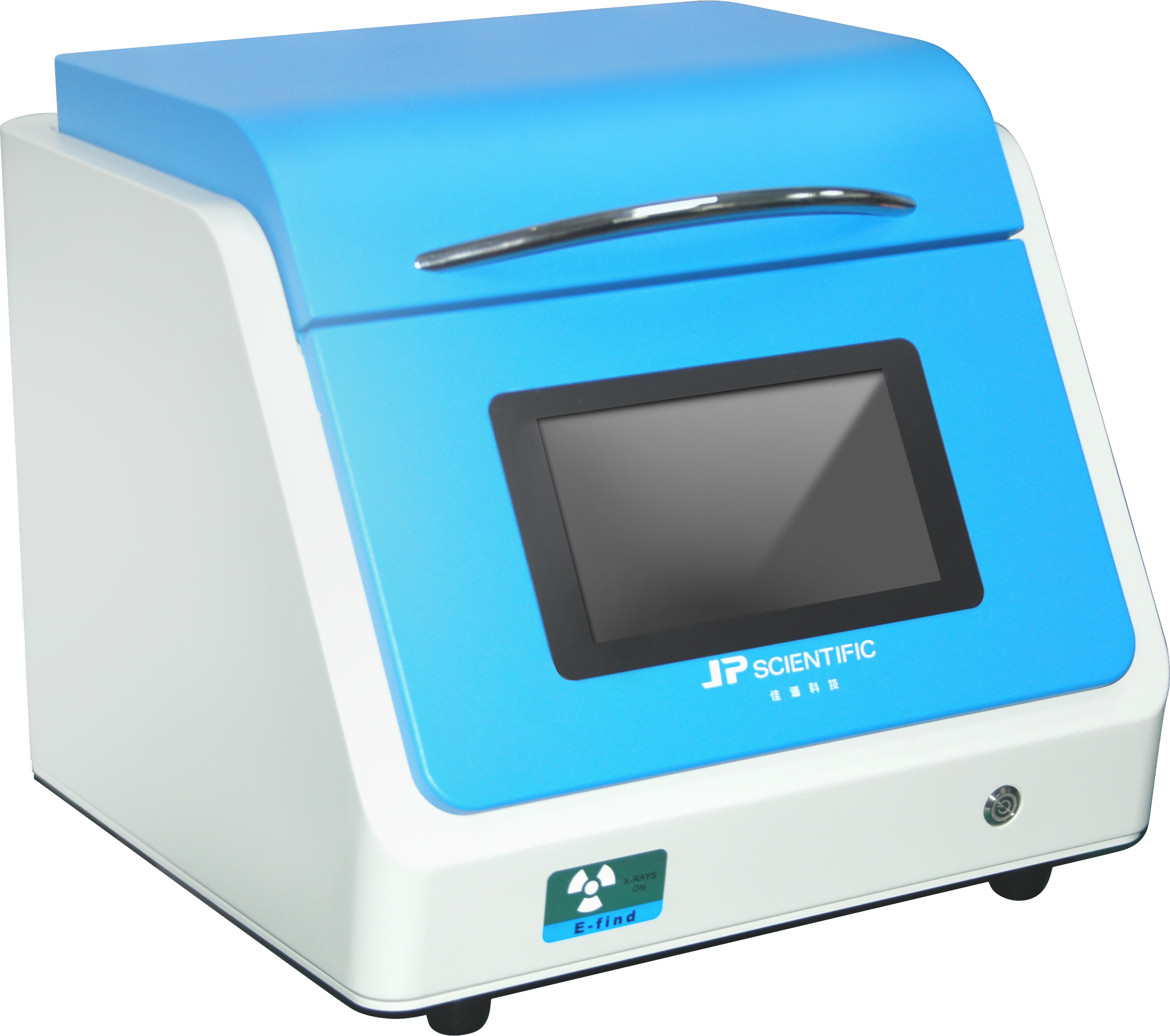
This application note presents a solution for the analysis of phosphorus (P), chlorine (Cl), zinc (Zn), and sulfur (S) elements in lubricating oils and additives using a high-precision X-ray fluorescence elemental analyzer.
Application Overview
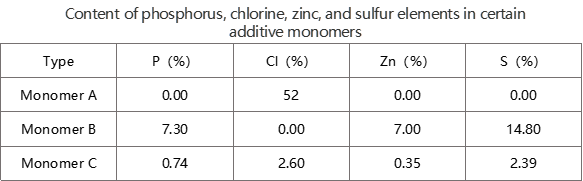
Additives are a critical component of lubricating oils. The content of macro elements such as phosphorus, chlorine, zinc, and sulfur in lubricating oil additives directly influences the quality of the finished lubricant. Individual lubricating oil components are typically high‑purity chemical compounds, and additives are formulated by blending various components in specified proportions. The matrix differences between individual components and finished additives are substantial, and the variety of individual components is considerable. Establishing a working curve would require extensive preparation of standard samples and make routine testing a labor‑intensive process.
By employing monochromatic X‑ray fluorescence spectrometry in combination with the Fundamental Parameter (FP) method, and using a limited set of standard samples to calibrate the additive blending model, accurate measurement of macro elements across significantly different matrices can be achieved. In addition, there is no need to select a calibration or standardization model, which simplifies the operation and enables fast measurement.
Technical Principles
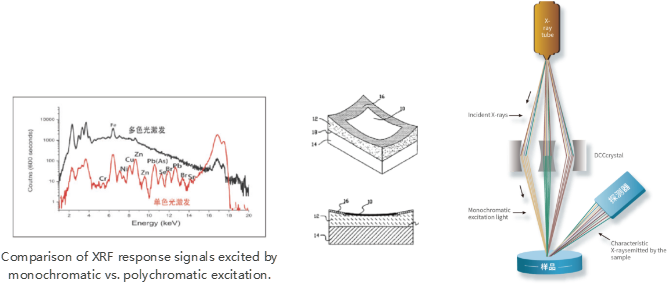
The High-Precision X-ray Fluorescence Elemental Analyzer (HPXRF) utilizes Monochromatic Focusing Doubly Curved Crystal (DCC) optics, which monochromatize polychromatic X-rays from the source and effectively focus them onto the sample. This greatly enhances the instrument's signal-to-noise ratio. Upon monochromatization, elements in the sample emit characteristic X-ray fluorescence signals. These signals are collected and processed by a high-resolution Silicon Drift Detector (SDD), and the software's Fundamental Parameter (FP) algorithm calculates the elemental content in the sample.
Sample Testing
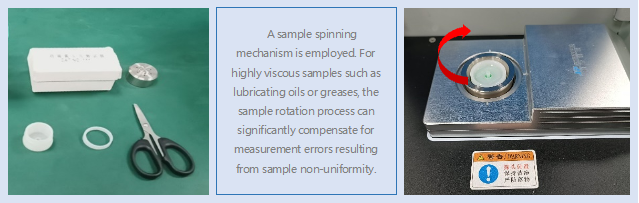
This application utilizes a two-in-one plastic sample cup, which is easy to operate and offers high repeatability.
Performance Data
Standard Curves
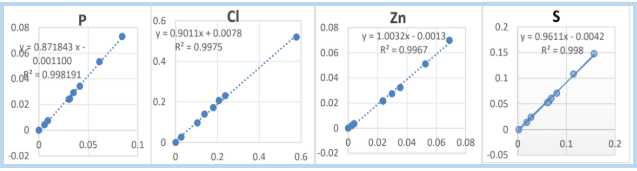
Several additive monomers with known concentrations and 4 types of blended additives were used as standard samples to establish the standard curves. Given the significant variation in the ratios of various additives and the distinct chemical nature of the monomers, precise matrix effect corrections are essential. The linear correlation coefficients (R²) for the standard curves of P, Cl, Zn, and S are 0.998, 0.997, 0.996, and 0.998, respectively.
Repeatability
A sample was tested 11 times repeatedly, with a measurement time of 100 seconds. The relative standard deviation (RSD) was calculated to evaluate the test repeatability for P, Cl, Zn, and S.

Accuracy
To verify the accuracy of the model, 7 types of finished additives were analyzed. The measured values, standard values, and deviations are recorded below.

Installation Requirements

Technical Specifications

Features and Advantages