
Environmental Monitoring

Application of High-Precision X-ray Fluorescence Elemental Analyzer for On-Site Rapid Determination of Inorganic Elements in Water
This application note presents a solution for the on-site rapid determination of elements such as Arsenic (As), Cadmium (Cd), Cobalt (Co), Chromium (Cr, including hexavalent chromium), Copper (Cu), Iron (Fe), Indium (In), Manganese (Mn), Molybdenum (Mo), Nickel (Ni), Lead (Pb), Antimony (Sb), Selenium (Se), Tin (Sn), Strontium (Sr), Thallium (Tl), Zinc (Zn), and others in surface water, groundwater, drinking water, domestic sewage, and industrial wastewater.
Application Overview
Water is essential to human life, and its quality is widely acknowledged as a critical factor for public health. Whether from natural surface water and groundwater, or from man‑made domestic sewage and industrial wastewater, water quality remains closely tied to human well‑being.
Current analytical methods for metal content in water, such as cold vapor atomic absorption spectrometry and atomic absorption spectrophotometry, typically require large laboratory instruments, involve complex operational procedures, and have long turnaround times. These limitations make them less suitable for rapid on‑site heavy metal monitoring. The E‑max series high‑precision X‑ray fluorescence elemental analyzer offers a practical alternative, enabling simultaneous, rapid, and accurate quantification of multiple inorganic elements in water samples.
Technical Principles
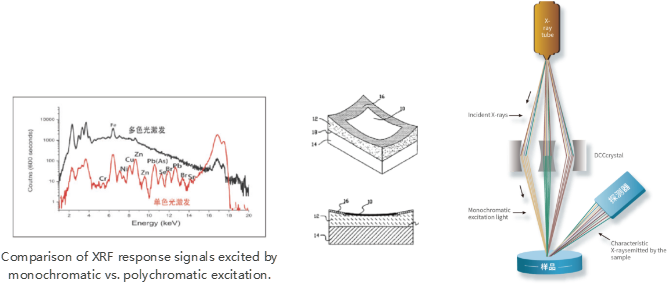
The High-Precision X-ray Fluorescence Elemental Analyzer (HPXRF) utilizes Monochromatic Focusing Doubly Curved Crystal (DCC) optics, which monochromatize polychromatic X-rays from the source and effectively focus them onto the sample. This greatly enhances the instrument's signal-to-noise ratio. Upon monochromatization, elements in the sample emit characteristic X-ray fluorescence signals. These signals are collected and processed by a high-resolution Silicon Drift Detector (SDD), and the software's Fundamental Parameter (FP) algorithm calculates the elemental content in the sample.
Sample Testing
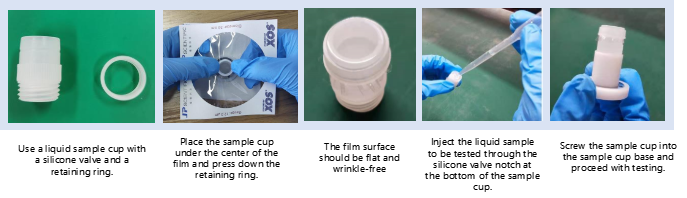
"Direct Measurement Method" Sample Preparation
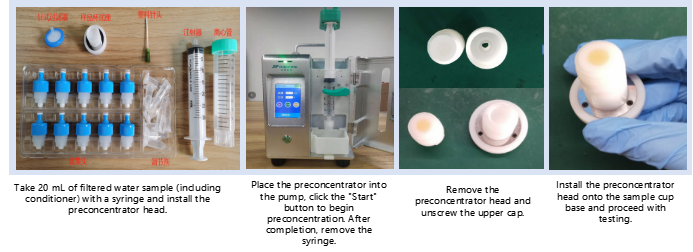
"Preconcentration Method" Sample Preparation
Performance Data
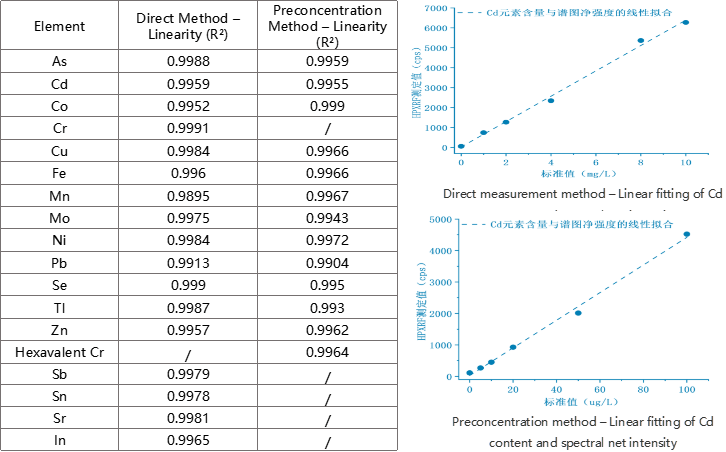
Standard Curves
Direct Measurement Method: Mixed metal ions at different concentrations are directly injected for testing to plot standard curves for each element.。
Preconcentration Method: Preconcentration membranes are used to enrich mixed metal ions at different concentrations, and the enriched membranes are tested to plot standard curves for each element.
Accuracy
Spike recovery tests were conducted on 5 real samples: drinking water, groundwater, surface water, domestic sewage, and industrial wastewater. The spike recovery results are as follows.

Features and Advantages