
Environmental Monitoring
Application of High-Precision X-ray Fluorescence Elemental Analyzer for the Determination of Trace Chlorine in a Continuous Catalytic Reforming / Aromatics Extraction Complex
This application note presents a solution for the precise analysis of chlorine content in the range of 0.15 ppm to 5 ppm in naphtha, reformate, samples before and after the dechlorination column, mixed xylene, PX, etc., within a Continuous Catalytic Reforming / Aromatics Extraction Complex, using a monochromatic X-ray fluorescence elemental analyzer.
Application Overview
Continuous Catalytic Reforming (CCR) plays a key role in modern refining and petrochemical integration projects. The CCR unit typically processes heavy naphtha to sequentially yield benzene, toluene, mixed xylene, PX, depentanized oil, and other valuable chemical intermediates via reforming, dechlorination, aromatics extraction, depentanization, adsorption separation, and disproportionation. Because CCR units commonly employ chlorides as catalysts, periodic chlorine replenishment is necessary to maintain catalyst activity, which results in a measurable chlorine content in the reformate. However, downstream process feeds and final products are subject to tight chlorine specifications, typically below 0.5 ppm. Accordingly, accurate chlorine analysis in the CCR/Aromatics Extraction Complex is of considerable importance.
Monochromatic X‑ray fluorescence is commonly used for sulfur and chlorine analysis in gasoline, kerosene, diesel, and similar petroleum products. However, sample matrices from the Aromatics Extraction/CCR Complex differ considerably from those of conventional fuels. Applying standard calibration curves established for gasoline, kerosene, and diesel leads to substantial deviations, making them inadequate for these specific sample types.
To address the unique demands and product characteristics of the CCR/Aromatics Complex, a dedicated analytical package has been developed based on the monochromatic X‑ray fluorescence elemental analyzer platform. This package includes application models for reformer feed, reformate, mixed xylene, PX, o‑xylene, and toluene, and is designed to meet the reference standards ASTM D7536 and SH/T 0977.
Technical Principles
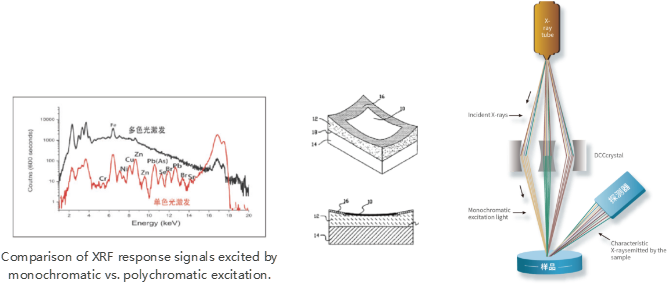
The High-Precision X-ray Fluorescence Elemental Analyzer (HPXRF) utilizes Monochromatic Focusing Doubly Curved Crystal (DCC) optics, which monochromatize polychromatic X-rays from the source and effectively focus them onto the sample. This greatly enhances the instrument's signal-to-noise ratio. Upon monochromatization, elements in the sample emit characteristic X-ray fluorescence signals. These signals are collected and processed by a high-resolution Silicon Drift Detector (SDD), and the software's Fundamental Parameter (FP) algorithm calculates the elemental content in the sample.
Sample Testing
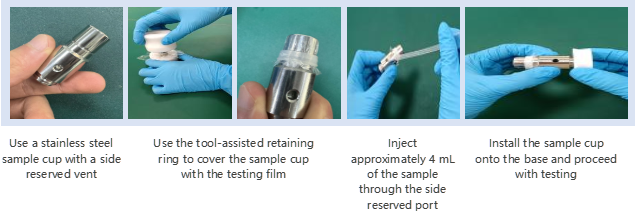
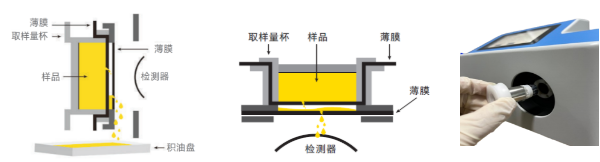
This solution utilizes a specially designed, easy-to-clean, low-background, and reusable stainless steel sample cup, along with supporting tooling. It features simple operation, low cost, and excellent test repeatability.
Side-Loading Design
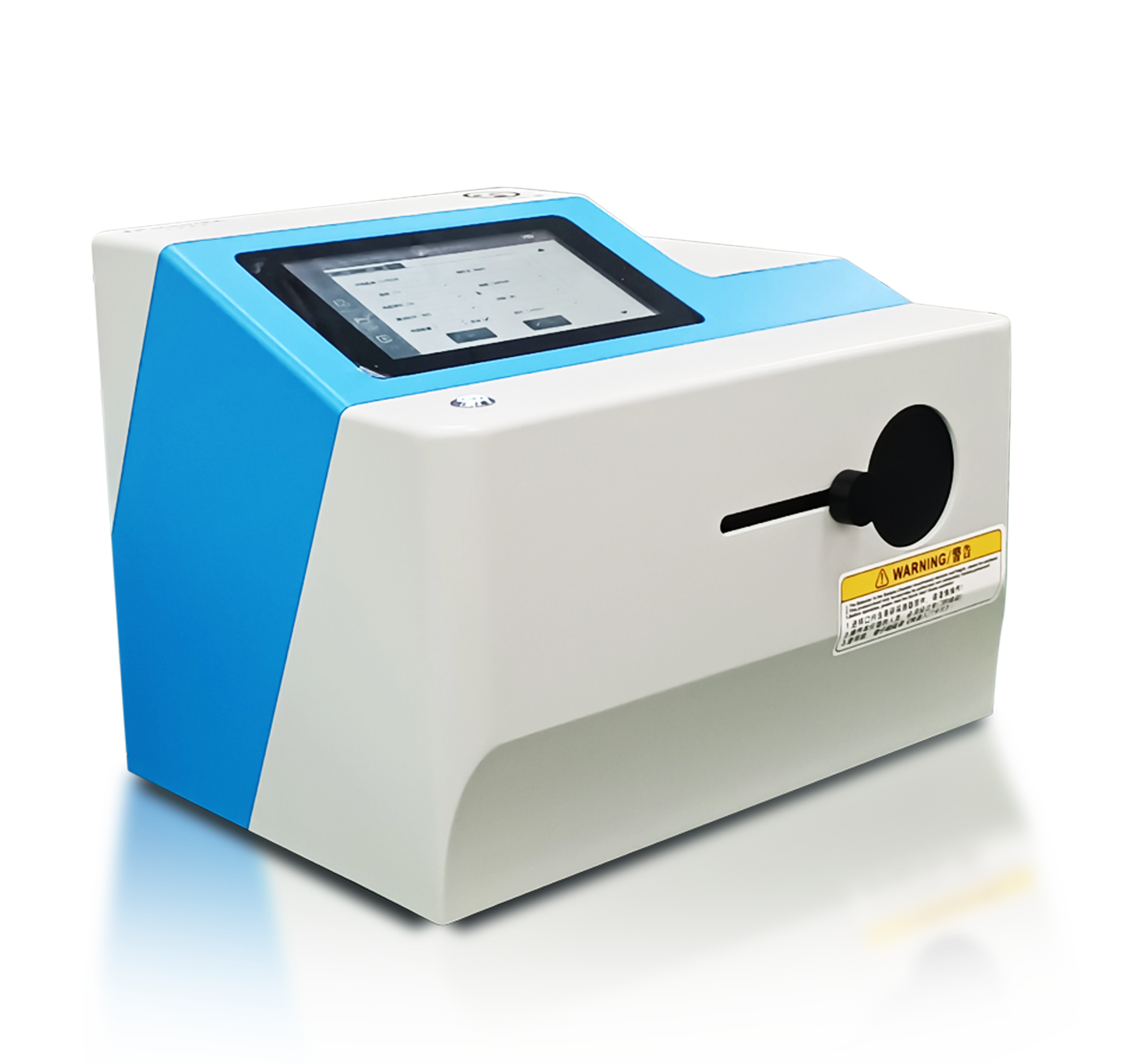
The E-lite series features an innovative side sample introduction system that directs accidental sample spills into a drip tray, preventing leaked oil from contaminating valuable components.
Performance Data
Standard Curves
Using the patented FP light-element algorithm model software, calibrated with standard samples in the range of 0.1 ppm to 3 ppm, the linear correlation coefficients for chlorine are: Heavy Naphtha 0.994, Reformate 0.9987, and Mixed Xylene 0.9985.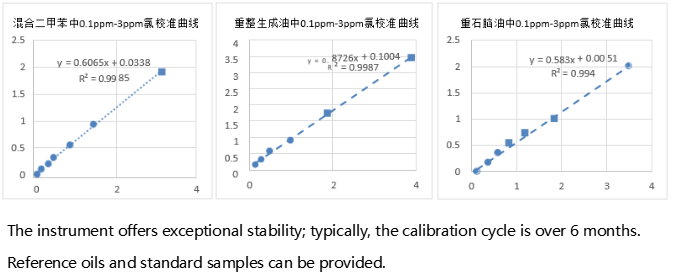
Repeatability
A reformate sample with a chlorine content of 0.6 ppm was tested 11 times repeatedly, yielding a standard deviation of 0.085, far superior to the 0.25 required by ASTM D7536.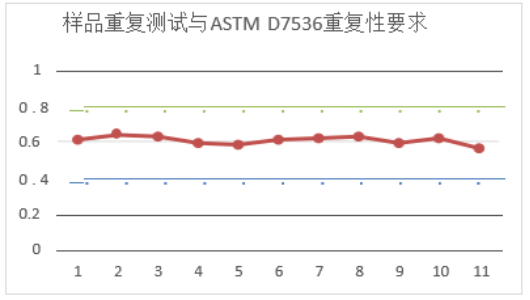
Installation Requirement

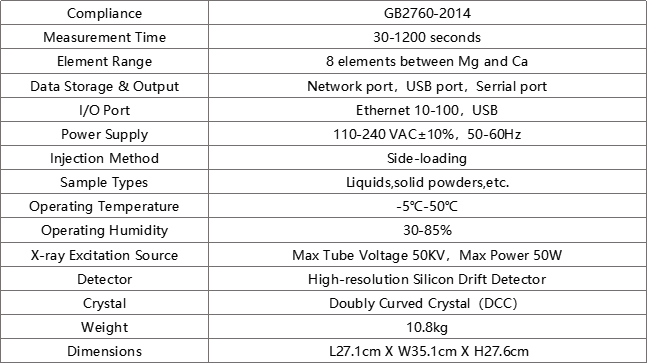
Technical Specifications
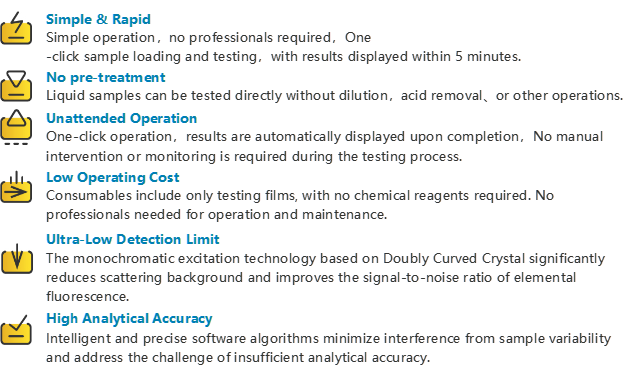
Features and Advantages