
Industrial Elemental Analysis
Application of High-Precision X-ray Fluorescence Elemental Analyzer for Phosphorus Determination in Edible Oils
This application note presents a solution for the quantitative analysis of phosphorus (P) in edible oils using a high-precision X-ray fluorescence elemental analyzer.
Application Overview
During the refining process, crude oil must undergo a degumming step. The gums present in crude oil are mainly composed of phospholipids; therefore, degumming is also referred to as "phosphorus removal." The presence of gums—particularly non‑hydratable phospholipids—can affect oil quality and storage stability, and has a notable impact on subsequent refining stages and further processing.
Most oilseeds contain relatively high levels of phospholipids. For instance, soybeans contain 1.6% to 2.5%, and cottonseeds contain 1.7% to 1.8%. As a result, phospholipids are readily transferred into the oil during the pressing process. Due to their hydrophilic nature, phospholipids increase the moisture content of the oil, which accelerates hydrolysis and rancidity. They also act as emulsifiers, leading to excessive foam formation during cooking. Moreover, they are prone to oxidation, turning dark and bitter upon heating, which adversely affects the quality of fried products. Therefore, phospholipids must be removed through refining. National standards for vegetable oils specify requirements for phospholipid content across different grades: during the 280°C heating test, the oil should not darken in color, and no precipitates should form.
Technical Principles
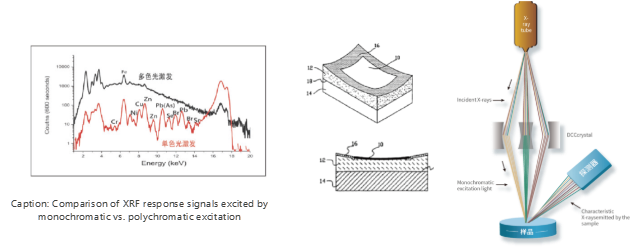
The High-Precision X-ray Fluorescence Elemental Analyzer (HPXRF) utilizes Monochromatic Focusing Doubly Curved Crystal (DCC) optics, which monochromatize polychromatic X-rays from the source and effectively focus them onto the sample. This greatly enhances the instrument's signal-to-noise ratio. Upon monochromatization, elements in the sample emit characteristic X-ray fluorescence signals. These signals are collected and processed by a high-resolution Silicon Drift Detector (SDD), and the software's Fundamental Parameter (FP) algorithm calculates the elemental content in the sample.
Performance Data
Standard Curve
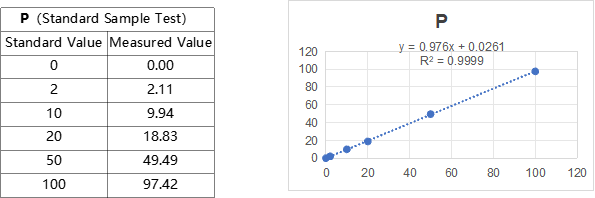
Mineral oil phosphorus standards and refined vegetable oil free of phospholipids were used as solvents. Oil samples with known phosphorus concentrations were prepared at 0, 2, 10, 20, 50, and 100 mg/kg. The E-light was used to measure these standard samples. A standard curve for phosphorus was plotted using the theoretical and measured values, and the regression equation was calculated.
 Parallelism
Parallelism Data of Phosphorus in Semi-Finished and Finished Edible Oils.

Repeatability
Repeatability Data of Phosphorus in Semi-Finished and Finished Edible Oils.

Accuracy
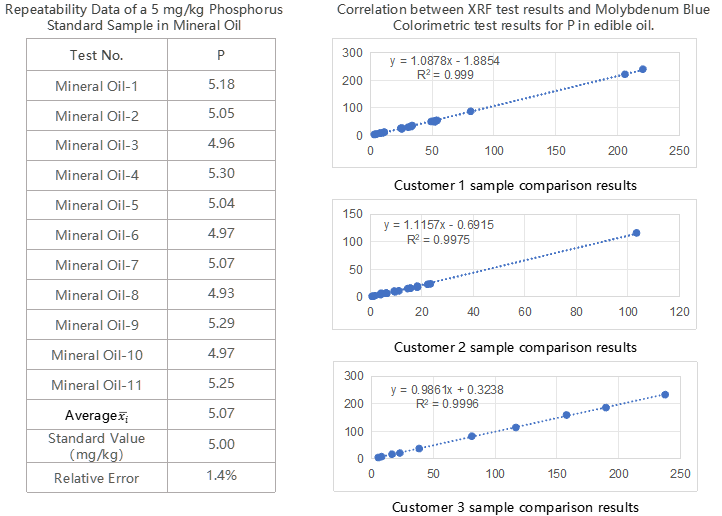
Test Method
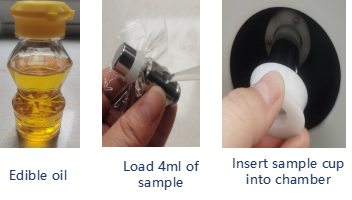
Sample Preparation Method
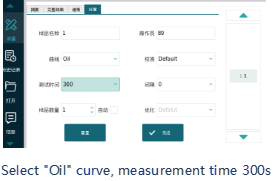
Sample Measurement Method
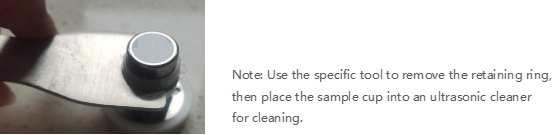
Sample Cup Cleaning Method
Features and Advantages