
Industrial Elemental Analysis
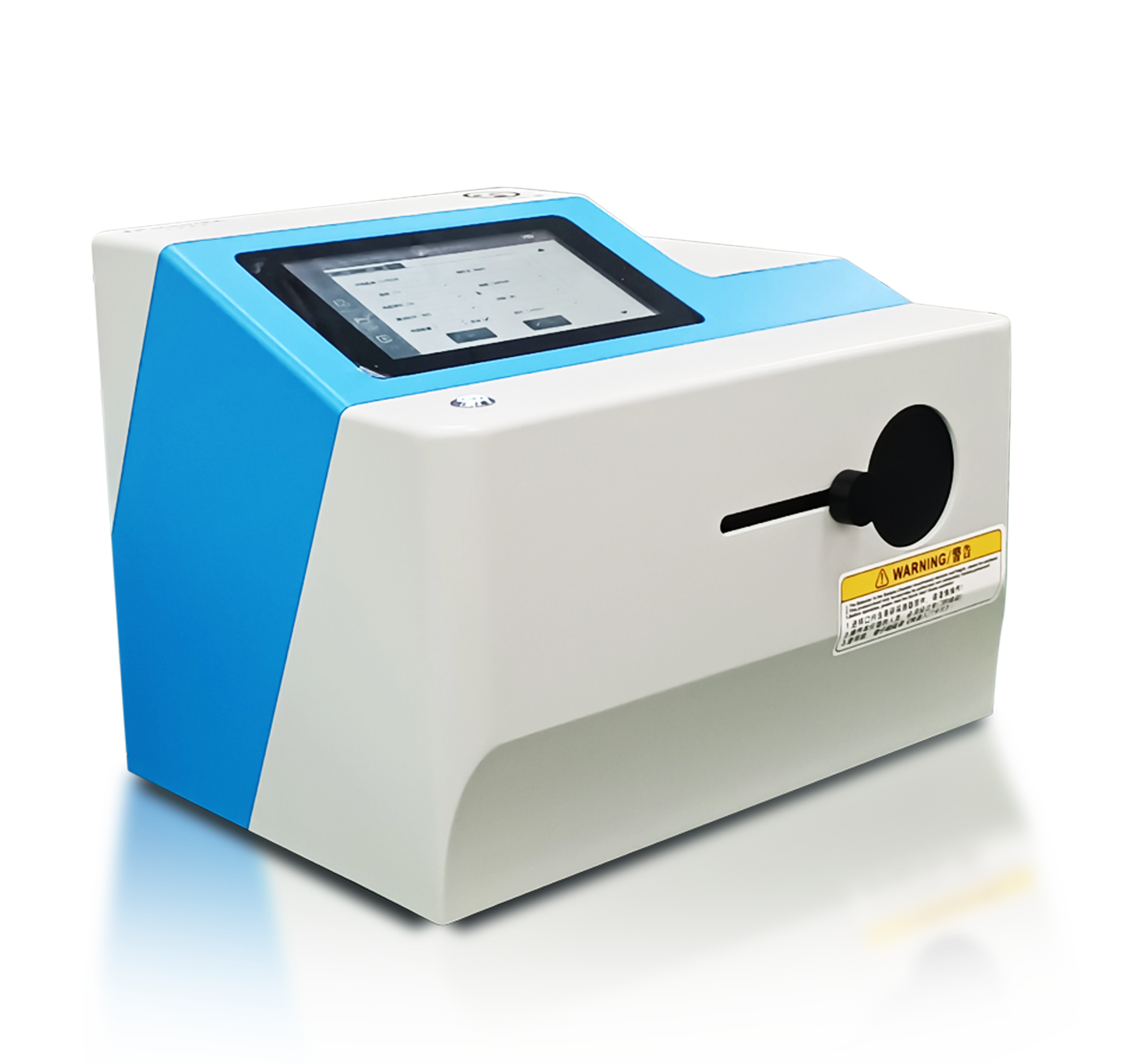
Application of High-Precision X-ray Fluorescence Elemental Analyzer for the Determination of Aluminum in Vaccines
This application note presents a solution for the rapid and accurate determination of aluminum (Al) in vaccines using a high-precision X-ray fluorescence elemental analyzer.
Application Overview
Aluminum adjuvants are widely used in human vaccines to enhance immune responses. However, aluminum may also induce allergic reactions and exert neurotoxic effects, potentially causing adverse reactions such as pain, swelling at the injection site, and nervous system impact. Therefore, aluminum dosage must be carefully balanced between its adjuvant efficacy and safety considerations. Rapid and accurate determination of aluminum content in vaccines is a practical requirement for vaccine manufacturers and testing laboratories.
Current analytical methods for aluminum in vaccines include complexometric titration, UV spectrophotometry, ICP‑OES, and ICP‑MS. These techniques are associated with certain limitations, such as relatively high sample consumption, complex procedures, and slower analysis throughput. The high‑precision X‑ray fluorescence elemental analyzer features a compact footprint, light weight, and straightforward operation, enabling rapid and accurate quantification of aluminum content in vaccine samples.
Technical Principles
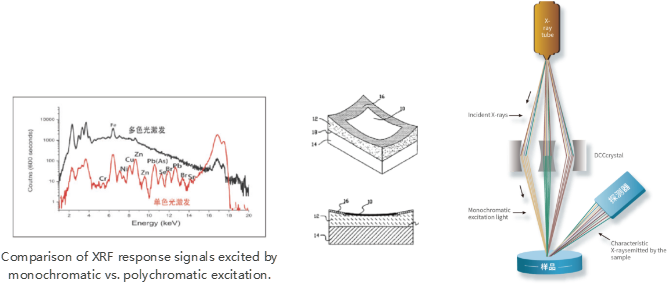
The High-Precision X-ray Fluorescence Elemental Analyzer (HPXRF) utilizes Monochromatic Focusing Doubly Curved Crystal (DCC) optics, which monochromatize polychromatic X-rays from the source and effectively focus them onto the sample. This greatly enhances the instrument's signal-to-noise ratio. Upon monochromatization, elements in the sample emit characteristic X-ray fluorescence signals. These signals are collected and processed by a high-resolution Silicon Drift Detector (SDD), and the software's Fundamental Parameter (FP) algorithm calculates the elemental content in the sample.
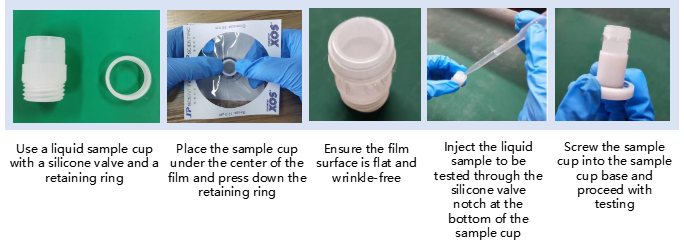
Sample Testing
 Performance Data
Standard Curve
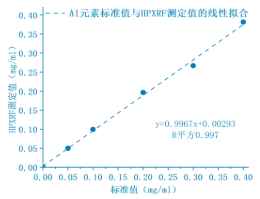
Using an inactivated SARS-CoV-2 vaccine (Vero cell), gradient solutions of aluminum at concentrations of 0, 0.05, 0.1, 0.2, 0.3, and 0.4 mg/mL were prepared via standard addition. The measurement time was set to 300 seconds to establish a standard curve.
Currently, aluminum adjuvants in commercial vaccines worldwide are predominantly in the range of 0.3 to 0.5 mg/mL. The E-lite instrument achieves a detection limit of 0.025 mg/mL for Al.
Repeatability and Long-Term Stability

Accuracy
Ten samples from 5 different vaccine types were selected and analyzed for Al content using both ICP-OES and HPXRF. The relative error between the measured values was calculated.

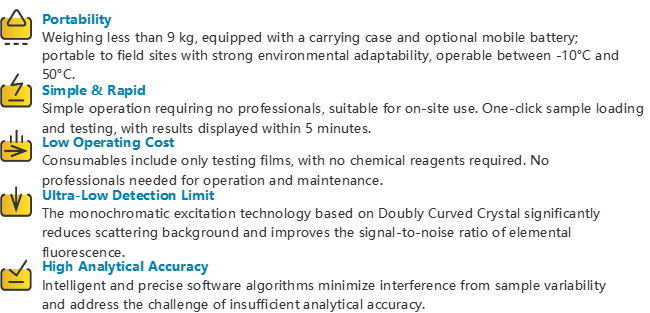
Features and Advantages