
Industrial Elemental Analysis
Application of High-Precision X-ray Fluorescence Elemental Analyzer for the Determination of Gold in Gold Ores
This application note presents a solution for the quantitative analysis of gold (Au) in gold ores using a high-precision X-ray fluorescence elemental analyzer.
Application Overview
Gold is present at low concentrations in nature. Gold analysis plays an important role throughout the entire process of prospecting, mining, and production. Current methods for determining gold content in ores include flame atomic absorption spectrometry (FAAS) and ICP‑MS.
Owing to the inherent heterogeneity of raw gold ore samples and matrix interference from other elements, conventional detection methods for accurate gold determination involve relatively complex procedures. Monochromatic excitation XRF technology, combined with a gold dissolution and preconcentration sample preparation method, can enhance the sensitivity and accuracy of gold detection in gold ores. The gold solution can be analyzed directly without the need for acid removal steps, thereby reducing manual sample preparation time.
Technical Principles
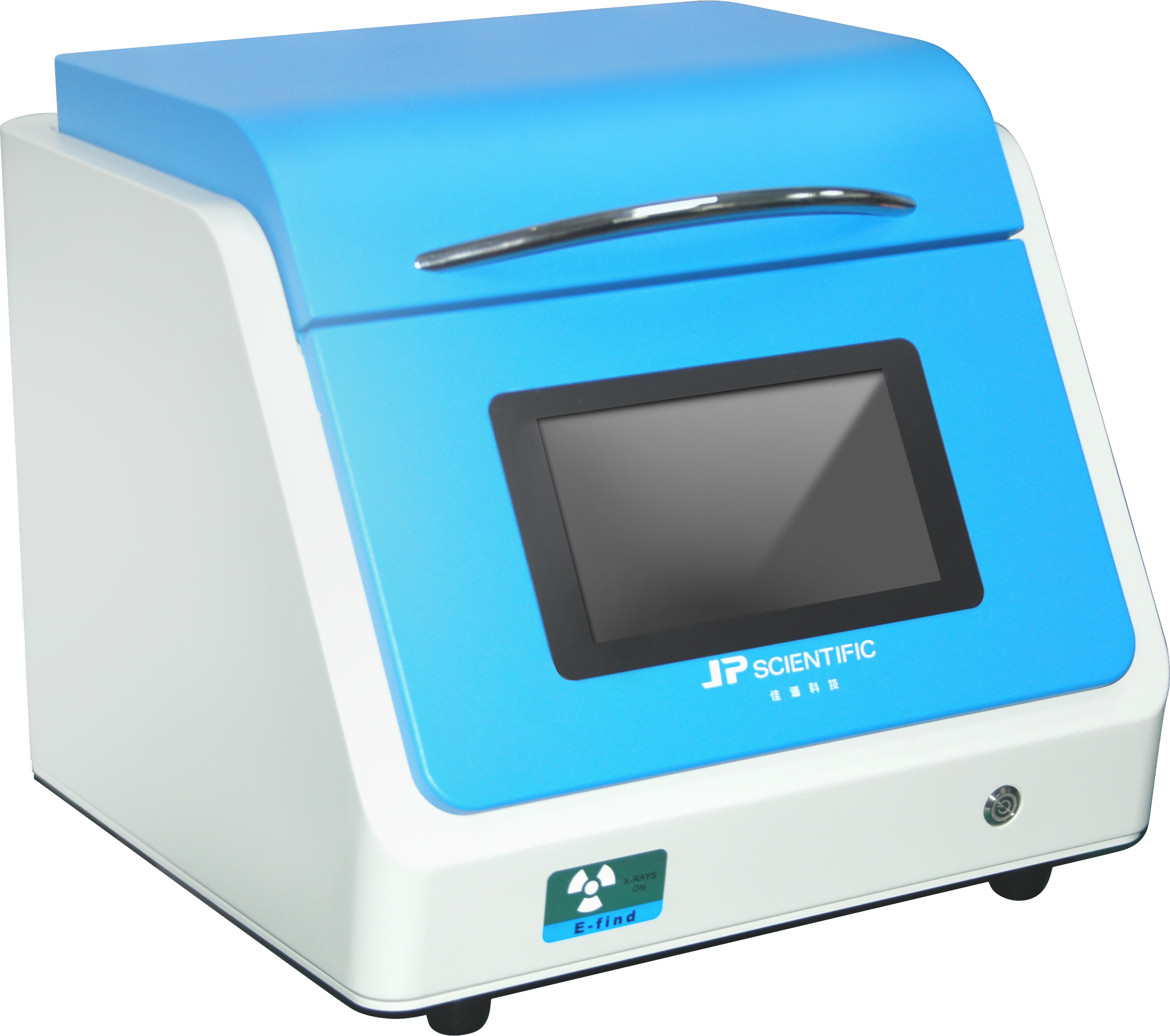
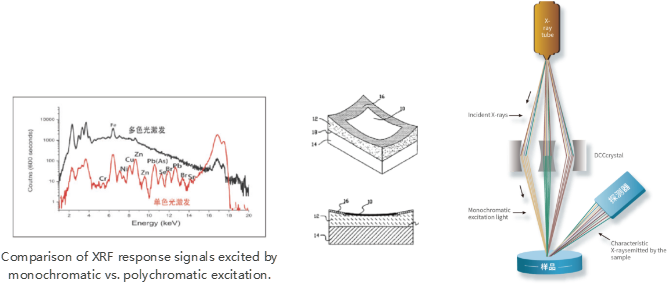
The High-Precision X-ray Fluorescence Elemental Analyzer (HPXRF) utilizes Monochromatic Focusing Doubly Curved Crystal (DCC) optics. This technology monochromatizes polychromatic X-rays emitted from the source and effectively focuses them onto the sample, significantly enhancing the instrument's signal-to-noise ratio. Following monochromatization, elements within the sample emit characteristic X-ray fluorescence signals. These signals are collected and processed by a high-resolution Silicon Drift Detector (SDD), and the software's Fundamental Parameter (FP) algorithm calculates the elemental content in the sample.
Sample Testing
Gold ore powder is dissolved in aqua regia to form a solution for testing. All tests presented below are based on solution analysis.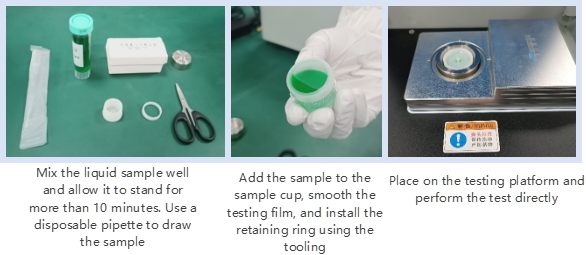
Performance Data
Standard Curves
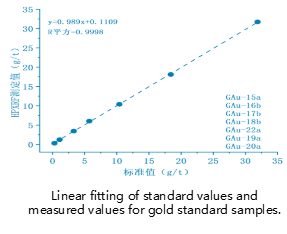
Gold standard samples were used to determine the gold element content. A calibration curve was established between the standard values and HPXRF measured values for gold.
Generally, gold ore with a gold content exceeding 0.3–0.5 g/t is considered economically viable. The E-find instrument achieves a detection limit of 0.02 g/t for gold in solution.
Parallelism
Two gold standard samples were used, with 3 parallel samples prepared for each. The range and relative standard deviation (RSD) were calculated.

Repeatability
The gold standard sample GAu-15a was tested 7 times repeatedly, and the relative standard deviation (RSD) was calculated.
Accuracy
Four actual gold ore samples were tested using both chemical methods and HPXRF. The deviation between the measured values obtained by the two methods was calculated.

Features and Advantages