
Industrial Elemental Analysis

Application of High-Precision X-ray Fluorescence Element Analyzer for the Determination of Iron and Silicon in Iron Ore Concentrate
This application note presents a solution for the quantitative analysis of iron (Fe) and silicon (Si) in iron ore concentrate using a high-precision X-ray fluorescence elemental analyzer.
Application Overview
Iron ore concentrate is widely used in metallurgical steelmaking and chemical production (e.g., magnetic materials, catalysts, etc.). The high‑precision X‑ray fluorescence elemental analyzer serves as a well‑suited solution for determining the composition of iron ore concentrate. Built upon mature XRF analytical technology, it enables rapid quantitative analysis of iron and silicon, delivering reliable detection precision and good stability. The results are accurate and dependable, effectively supporting quality control requirements for iron ore concentrate. The system eliminates the need for complex sample digestion, chemical reagents, and lengthy pre‑treatment steps, thereby simplifying detection workflows and shortening analysis turnaround times. As a non‑destructive testing method, samples can be conveniently reused. In addition, the instrument features user‑friendly operation and a high degree of automation, making it suitable for various scenarios—from online production line sampling to laboratory batch testing—and providing efficient and precise data support throughout the entire process of ore dressing, batching, and finished product grading.
Technical Principles
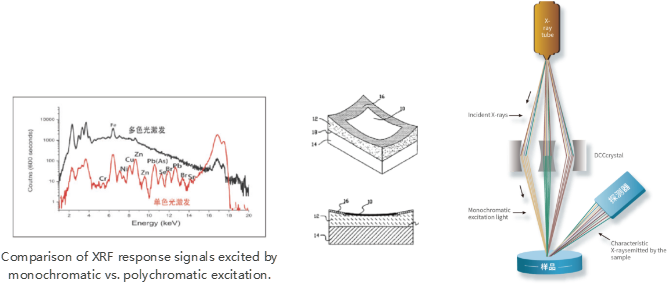
The High-Precision X-ray Fluorescence Elemental Analyzer (HPXRF) utilizes Monochromatic Focusing Doubly Curved Crystal (DCC) optics, which monochromatize polychromatic X-rays from the source and effectively focus them onto the sample. This greatly enhances the instrument's signal-to-noise ratio. Upon monochromatization, elements in the sample emit characteristic X-ray fluorescence signals. These signals are collected and processed by a high-resolution Silicon Drift Detector (SDD), and the software's Fundamental Parameter (FP) algorithm calculates the elemental content in the sample.
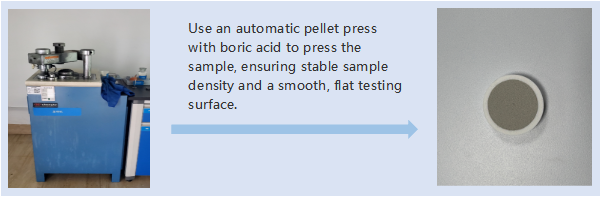
Sample Preparation Method
Performance Data
Standard Curve
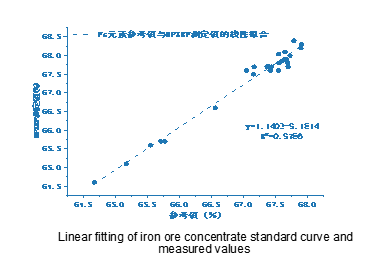
Actual iron ore concentrate samples were used for the determination of iron content. Using laboratory standard method values as the reference, a linear correlation curve between the standard values and HPXRF measured values for iron was plotted. In subsequent analyses, the HPXRF measured values were subjected to systematic error correction, and the corrected calculated values were used as the final iron content results.
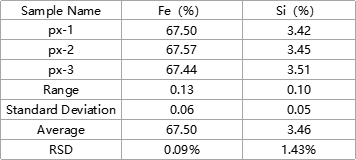
Parallelism
Two standard samples were used, with 3 parallel samples prepared for each. The range and relative standard deviation (RSD) were calculated.
Repeatability
A representative sample was selected and continuously tested 11 times under identical conditions. The relative standard deviation (RSD) of the measurement results was calculated.

Long-Term Stability
A representative sample was selected and repeatedly tested under identical conditions over 10 consecutive days, once per day. The measured values for each element were recorded, and the relative standard deviation (RSD) of the 10measurements was calculated.

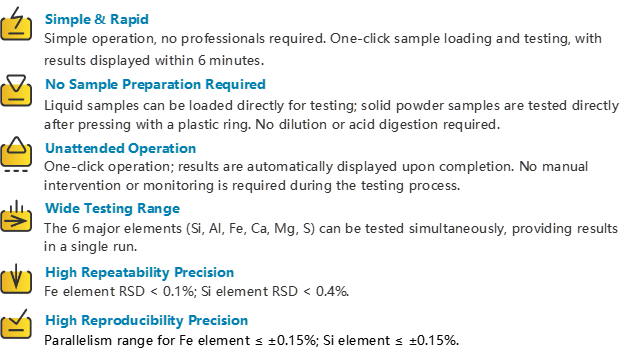
Features and Advantages